


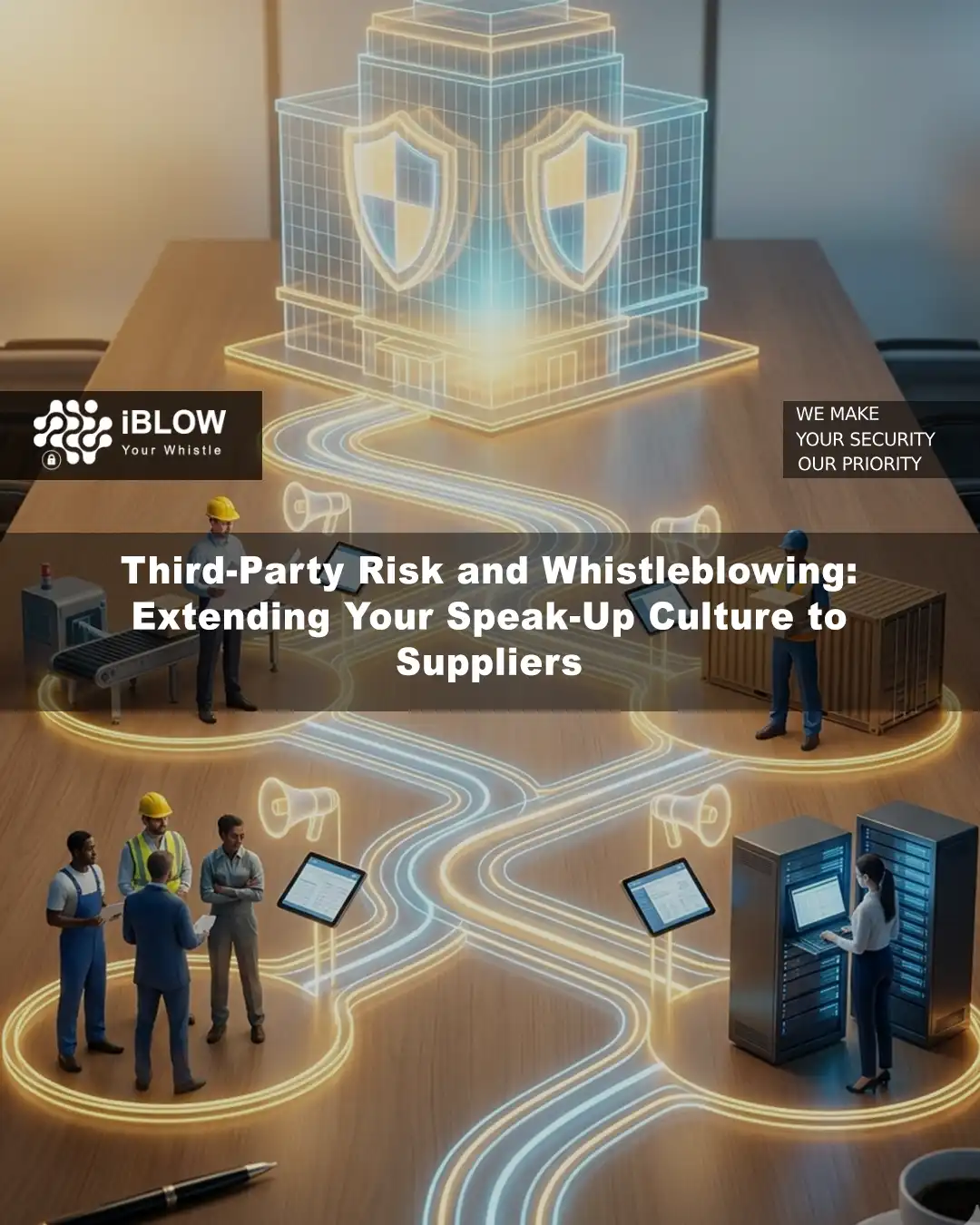
Why Third-Party Risk and Whistleblowing?
Modern compliance programmes can no longer stop at the organisation’s internal boundary. In many sectors, some of the most serious ethical, legal and operational risks emerge not from employees directly, but from third parties: suppliers, subcontractors, distributors, consultants, service providers, agents, and other business partners operating somewhere across the supply chain.
This is why a mature compliance approach must include third-party whistleblowing. If your organisation has built a speak-up culture for employees but has not extended that culture to suppliers and external partners, there is a significant blind spot in your risk framework.
Procurement teams, ESG leaders, compliance officers and senior management increasingly recognise the same reality: organisations are judged not only by what they do themselves, but also by what they tolerate, overlook or fail to detect in their third-party ecosystem. Misconduct in the supply chain can quickly become a direct reputational, legal, financial and governance issue for the contracting organisation.
A supplier may observe bribery in a tender process, conflicts of interest in vendor selection, manipulation of invoices, labour abuses in subcontracting, environmental breaches, data misuse, retaliation against workers, or deliberate concealment of product defects. Yet if that supplier has no safe, trusted and well-communicated reporting channel, the concern may remain invisible until it becomes a crisis.
Extending your speak-up culture to suppliers is therefore not a cosmetic compliance upgrade. It is a strategic risk management decision. It strengthens transparency, improves early detection, supports procurement integrity, reinforces ESG commitments, and helps organisations build more resilient and accountable business relationships.
Why supplier reporting matters more than ever?
Third-party relationships are often where complexity, distance and ambiguity create the greatest exposure. Your organisation may have robust internal policies, training and approval workflows, but suppliers operate under different pressures, management structures, legal environments and cultural norms. That difference creates risk.
The challenge is not only malicious misconduct. It is also silence. In many business relationships, suppliers hesitate to raise concerns because they fear losing the contract, damaging the relationship, being labelled “difficult”, or triggering commercial retaliation. In practice, this means that serious red flags can be seen early by third parties but never reported.
A procurement-led speak-up framework helps change this. It sends a clear message that the organisation values ethical reporting, prohibits retaliation, and expects integrity throughout the supply chain. It also helps shift whistleblowing from a purely internal HR or legal matter into a broader governance capability.
For organisations subject to increasing regulatory expectations, this is becoming essential. Anti-corruption requirements, due diligence obligations, supply chain governance standards, ESG disclosures, and data protection responsibilities all point in the same direction: organisations must take reasonable and demonstrable steps to manage third-party risk proactively.
A supplier reporting channel is one such step. It is not the only control, but it is one of the most practical, scalable and intelligence-rich controls available.
What risks should a third-party whistleblowing channel cover?
Many organisations make the mistake of launching a supplier reporting mechanism without clearly defining scope. As a result, suppliers do not know what should be reported, who handles reports, or whether issues outside procurement are accepted.
A stronger approach is to define reporting categories clearly while allowing some flexibility for unexpected concerns. Typical categories include:
-
bribery and corruption
-
conflicts of interest
-
fraud, invoice manipulation or procurement irregularities
-
bid rigging or anti-competitive conduct
-
harassment, discrimination or retaliation connected to the business relationship
-
modern slavery, forced labour or labour exploitation
-
health, safety or environmental misconduct
-
breaches of contractual ethics clauses
-
product quality concealment or safety issues
-
misuse of confidential information
-
data protection and privacy breaches
-
cyber and information security concerns
-
attempts to pressure, threaten or improperly influence supplier staff
This scope should be reflected in supplier policies, codes of conduct, onboarding materials, contract language, website disclosures and reporting forms.
The business case for procurement and ESG teams
For procurement and ESG leaders, the value of supplier whistleblowing is practical and measurable.
First, it improves early detection.
Third parties often see warning signs long before internal teams do. A supplier may notice suspicious tender specifications, unusual payment requests, side arrangements, inappropriate gifts, or irregular instructions from internal stakeholders.
Second, it improves governance evidence.
In audits, investigations, regulatory reviews and board reporting, organisations need to show that they created avenues for concerns to be raised safely and that they responded properly.
Third, it supports ESG credibility.
Many organisations publish commitments on ethics, responsible sourcing, human rights and sustainability. Those commitments are weakened if external stakeholders have no realistic way to report concerns confidentially.
Fourth, it helps reduce commercial disruption.
Unreported misconduct tends to escalate. Small integrity failures can become serious contract disputes, legal claims, reputational incidents or supplier exits. A functioning reporting system helps surface issues while they are still manageable.
Finally, it strengthens trust-based supplier relationships.
The best suppliers do not see speak-up channels as hostile. They see them as a sign that the buyer values fairness, accountability and process integrity.
Common mistakes organisations make
Despite good intentions, many organisations fail to make supplier reporting effective. The most common mistakes include:
Treating supplier reporting as a legal footnote.
A reporting clause buried in terms and conditions is not enough. Suppliers need visibility, clarity and confidence.
Using employee-only language.
Many whistleblowing policies are written entirely for staff and do not clearly apply to suppliers, contractors or external workers.
Providing a channel but no trust.
If suppliers believe reports will go directly to the procurement contact involved in the issue, they will remain silent.
Ignoring GDPR and confidentiality design.
Reports involving third parties often contain personal data, contractual information and sensitive allegations. Improper handling creates both legal and ethical risk.
Failing to define ownership.
- Who receives reports?
- Compliance?
- Legal?
- Procurement?
- HR?
- Information Security?
Without a governance model, cases stall.
No feedback loop or metrics.
If the organisation cannot measure uptake, response time, case themes and outcomes, it cannot improve.
These weaknesses are avoidable, but only if implementation is approached as an operational programme rather than a checkbox exercise.
A practical implementation roadmap
Extending a speak-up culture to suppliers works best when phased. Below is a practical roadmap many organisations can adapt.
Phase 1: Define scope and objectives
Start by identifying which third parties are in scope. Will the programme cover all suppliers, only critical suppliers, subcontractors, intermediaries, distributors, gig workers, consultants, and temporary external staff?
Then define what the channel is meant to achieve. Possible objectives include:
-
raising concerns earlier in the procurement lifecycle
-
improving anti-corruption controls
-
supporting ESG and human rights oversight
-
capturing data protection and security incidents involving suppliers
-
enabling non-retaliatory escalation routes
At this stage, align compliance, procurement, legal, privacy and leadership on priorities.
Phase 2: Design governance and roles
A supplier reporting programme needs clear ownership. At minimum, define:
-
who receives reports
-
who triages them
-
who investigates them
-
when procurement is informed
-
when legal, HR, security or privacy teams are involved
-
how conflicts of interest are managed
-
how confidentiality is preserved
For example, a report about bribery involving a procurement manager should not be routed to that manager or their immediate chain without safeguards.
This is also where technology matters. A structured case management platform such as iComply.pt can help centralise intake, track actions, preserve audit trails, assign roles securely and demonstrate governance maturity across multiple compliance areas.
Phase 3: Address privacy and data protection
Any whistleblowing mechanism involving suppliers must be designed with privacy in mind. Reports may involve named individuals, allegations, supporting documents, email records, transactional details and sensitive contextual information.
This requires lawful handling, appropriate retention periods, access controls, confidentiality safeguards, and clear privacy information. Organisations that overlook this area risk turning a compliance control into a GDPR problem.
This is where specialist alignment with iPrivacy.eu becomes relevant. Privacy-by-design, lawful processing analysis, access control rules and retention governance are essential for third-party reporting frameworks.
Phase 4: Update policies, contracts and supplier communications
Once governance is defined, documentation must be updated. This may include:
-
supplier code of conduct
-
procurement policy
-
whistleblowing policy
-
anti-bribery policy
-
privacy notices
-
contractual clauses
-
onboarding packs
-
supplier portal content
-
website reporting page
Language should be plain and practical. Suppliers should know:
-
what can be reported
-
who can report
-
whether anonymous reporting is allowed
-
how confidentiality is protected
-
what retaliation is prohibited
-
what happens after submission
-
whether they will receive follow-up
Phase 5: Launch and communicate
A channel that exists but is not visible is almost useless. Communication should be active and repeated, not passive.
Practical options include:
-
contract award packs
-
supplier onboarding emails
-
vendor portal banners
-
invoice footer notices
-
procurement training sessions
-
annual supplier ethics reminders
-
QR codes on supplier documentation
-
dedicated website pages
The tone matters. The message should not sound accusatory. It should reinforce partnership, integrity and safe escalation.
Phase 6: Measure, review and improve
After launch, measure performance. Useful indicators include:
-
number of supplier-originated reports
-
report categories
-
anonymous vs identified reports
-
average acknowledgement time
-
average triage time
-
case substantiation rate
-
remediation actions
-
retaliation concerns raised
-
recurring suppliers or business units involved
-
trends by geography or procurement category
These metrics help leadership move from assumptions to evidence. They also connect naturally with broader assessments on the effectiveness of whistleblowing systems.
Third-party whistleblowing checklist
Below is a practical checklist organisations can use.
Governance checklist
-
reporting scope approved
-
roles and responsibilities documented
-
escalation paths defined
-
conflict management rules established
-
case handling standards adopted
Policy checklist
-
whistleblowing policy updated for third parties
-
supplier code of conduct includes reporting rights
-
anti-retaliation wording included
-
contract clauses reviewed
-
privacy information updated
Operational checklist
-
reporting channel accessible externally
-
anonymous option considered
-
multiple languages assessed where relevant
-
intake categories configured
-
evidence upload enabled securely
-
acknowledgement process defined
-
investigation workflow documented
Communication checklist
-
suppliers informed at onboarding
-
procurement teams briefed
-
website page published
-
reminder cadence scheduled
-
reporting instructions easy to understand
Monitoring checklist
-
KPIs defined
-
reporting to management scheduled
-
lessons learned process in place
-
repeat issue analysis performed
-
annual framework review planned
Mini-scenario: when a supplier sees what your organisation cannot
A mid-sized manufacturing company launched a supplier ethics initiative after expanding into several new markets. One of its packaging suppliers noticed that a procurement contact at the buyer repeatedly suggested that “expedited approval” would be easier if certain unofficial hospitality arrangements were provided during contract renewal season.
The supplier felt uncomfortable but initially stayed silent. The commercial relationship was important, and the supplier feared being excluded from future opportunities. Six months later, after the organisation introduced a dedicated external reporting channel with clear anti-retaliation language and independent case handling, the supplier submitted a confidential report.
An internal investigation found not only inappropriate conduct by one procurement employee, but also weak approval controls and poor segregation of duties in the vendor renewal process. Because the issue was reported early enough, the organisation was able to intervene before broader legal exposure emerged. The case led to disciplinary action, revised approval workflows, targeted procurement training and stronger supplier communication.
The lesson is simple: third parties often see the earliest warning signals. Whether those signals become actionable intelligence depends on whether the organisation has created a safe route to speak up.
Downloadable template: Supplier Speak-Up Readiness Template
To support implementation, organisations should maintain a simple readiness template covering:
-
suppliers in scope
-
current reporting channels available
-
policy gaps
-
contractual language gaps
-
privacy and GDPR review status
-
roles and case owners
-
communication materials required
-
KPI dashboard fields
-
launch timeline
-
review date
This kind of template is especially useful for procurement and compliance teams working across multiple entities, regions or supplier classes.
Suggested 90-day timeline
A practical first rollout can often be delivered within 90 days.
Days 1–30
-
confirm scope
-
map stakeholders
-
review current policies
-
assess reporting technology
-
identify privacy requirements
-
define ownership model
Days 31–60
-
update policies and notices
-
draft supplier communications
-
configure case categories and workflows
-
prepare contract wording
-
train internal handlers
Days 61–90
-
launch channel externally
-
communicate to suppliers
-
begin management reporting
-
review first cases or test submissions
-
refine process based on feedback
This timeline may vary depending on sector, geography and regulatory complexity, but it provides a realistic structure for moving from concept to operation.
Final thoughts
A strong speak-up culture should not end at the employee handbook or the office door. In today’s risk landscape, organisations need visibility across the broader ecosystem in which decisions are made, contracts are managed, and ethical failures can emerge.
Extending whistleblowing access to suppliers is one of the clearest ways to strengthen that visibility. It helps procurement teams detect risk earlier, helps compliance teams demonstrate governance maturity, helps ESG teams support real accountability, and helps leadership protect trust across the value chain.
Most importantly, it sends a message that integrity is not selective. It applies not only inside the organisation, but across the relationships that sustain it.
If your organisation is reviewing how to extend its speak-up framework to third parties, this is the right time to act. The combination of clear policy, trustworthy process, privacy-aware design and structured technology can turn supplier reporting from a weak point into a meaningful strength.
Explore how iBlow.eu supports secure reporting frameworks, how iComply.pt can help structure case management and governance, and how iPrivacy.eu can support GDPR-aligned reporting design.
Suggested internal links to include in the article
Be part of the conversation that is shaping the future of work! Book a meeting!
See other articles that may be of interest to you.
We hope you enjoyed this article.
Thank you!
Constantino Ferreira
iBlow.eu