


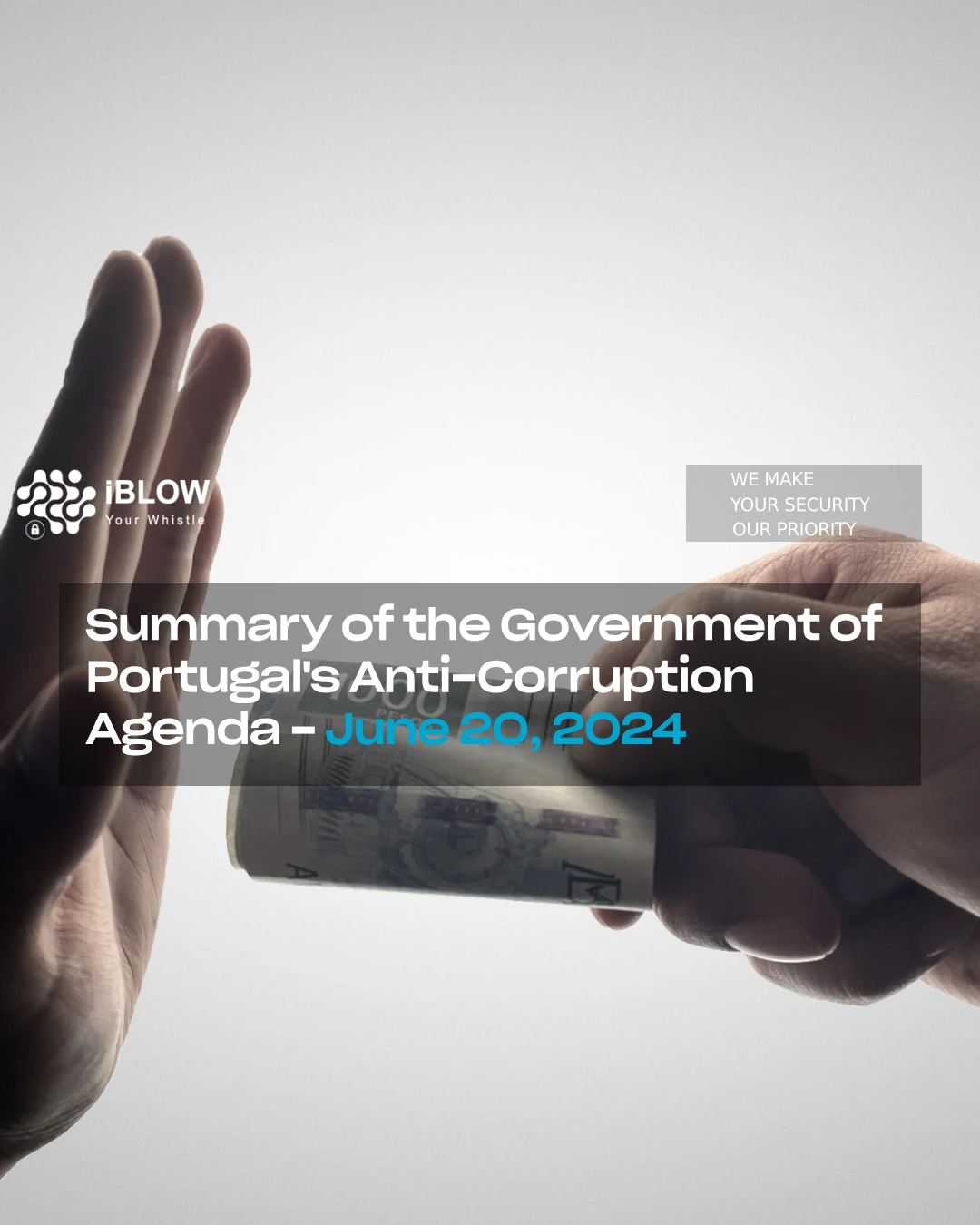
Corruption is one of the biggest challenges facing many nations around the world, and Portugal is no exception. With the aim of combating this evil that undermines trust in institutions, damages the economy and affects citizens’ quality of life, the government of Portugal presented a new Anti-Corruption Agenda on June 20, 2024. This article provides a detailed summary of this agenda, highlighting the main points and measures proposed.
1. Introduction and Background
1.1 The Importance of Fighting Corruption
Corruption is a complex phenomenon that negatively affects public administration, the private sector and society as a whole. It weakens democracy, increases inequalities and diverts resources that could be used for the development and well-being of the population.
1.2 Objectives of the Agenda
The Anti-Corruption Agenda aims to strengthen the mechanisms for preventing, detecting and repressing corrupt acts. It also seeks to promote a culture of integrity and transparency in the public and private sectors.
2. Strategic Axes of the Agenda
2.1 Prevention
2.1.1 Education and Awareness Raising
One of the main prevention strategies is to educate and raise awareness among the population about the evils of corruption. Educational programs will be implemented in schools and universities to train aware citizens committed to ethics.
2.1.2 Strengthening Institutions
The agenda includes strengthening the institutions responsible for preventing corruption, such as the General Inspectorate of Finance and the Court of Auditors. More resources will be allocated and specialized training will be carried out to empower civil servants.
2.2 Detection
2.2.1 Audits and Internal Controls
Strengthening audits and internal controls in public institutions is crucial for the early detection of irregularities. The agenda proposes the implementation of continuous auditing systems and the use of technology to monitor public transactions and contracts.
2.2.2 Whistleblower protection
To encourage the reporting of corrupt acts, the agenda establishes protection mechanisms for whistleblowers. These measures include guaranteed anonymity, protection against retaliation and incentives for reporting corruption.
2.3 Repression
2.3.1 Strengthening Investigative Capacity
The investigative capacities of the security forces and the Public Prosecutor’s Office will be expanded. New units specializing in financial crimes and corruption will be created, with access to advanced technologies for conducting complex investigations.
2.3.2 International cooperation
Corruption knows no borders, and international cooperation is essential for combating it effectively. Portugal will intensify collaboration with international organizations and other countries to exchange information and coordinate joint actions.
3. Specific Measures
3.1 Transparency in Public Administration
3.1.1 Access to Information
The agenda reinforces the importance of access to public information as a tool for social control. Transparency portals will be improved, making it easier for citizens to access information on public spending, contracts and government decisions.
3.1.2 Declaration of Assets and Income
All civil servants and politicians will be obliged to submit detailed declarations of assets and income, which will be periodically checked to identify possible illicit enrichment.
3.2 Reform of the Judicial System
3.2.1 Procedural speed
The slow pace of justice is one of the obstacles in the fight against corruption. The agenda proposes measures to speed up judicial proceedings, ensuring that corruption cases are tried quickly and effectively.
3.2.2 More severe penalties
Penalties for corruption crimes will be increased, with harsher sentences for the guilty. The agenda also suggests the creation of accessory penalties, such as disqualification from holding public office.
3.3 Private Sector
3.3.1 Corporate Compliance
Companies will be encouraged to adopt compliance programs, which include codes of conduct, regular training and internal mechanisms for detecting and reporting corrupt practices.
3.3.2 Public-Private Partnerships
Public-private partnerships will be closely monitored to prevent corruption. Strict criteria will be established for the selection of partners and the execution of projects, with periodic audits.
4. Expected Impact
4.1 Increased Confidence
The implementation of the Anti-Corruption Agenda should increase citizens’ trust in public institutions. A transparent and honest administration is fundamental to strengthening democracy and promoting social justice.
4.2 Economic Development
Corruption is an obstacle to economic development. By reducing corruption, the agenda will contribute to a fairer and more competitive business environment, attracting investment and fostering economic growth.
4.3 Improving Public Services
Funds that were previously siphoned off by corruption can be used to improve public services such as health, education and infrastructure, directly benefiting the population.
5. Conclusion
The Portuguese government’s new Anti-Corruption Agenda, presented on June 20, 2024, represents a significant step forward in the fight against corruption. With comprehensive measures covering prevention, detection and prosecution, the agenda aims to create an environment of integrity and transparency in the country. Its implementation will require effort and commitment from all parties involved, but the expected benefits in terms of public trust, economic development and quality of life are immense.
See original documentation here: Anti-Corruption Agenda – XXIV Constitutional Government (portugal.gov.pt)
See other articles that may be of interest to you.
We hope you enjoyed this article.
Thank you!