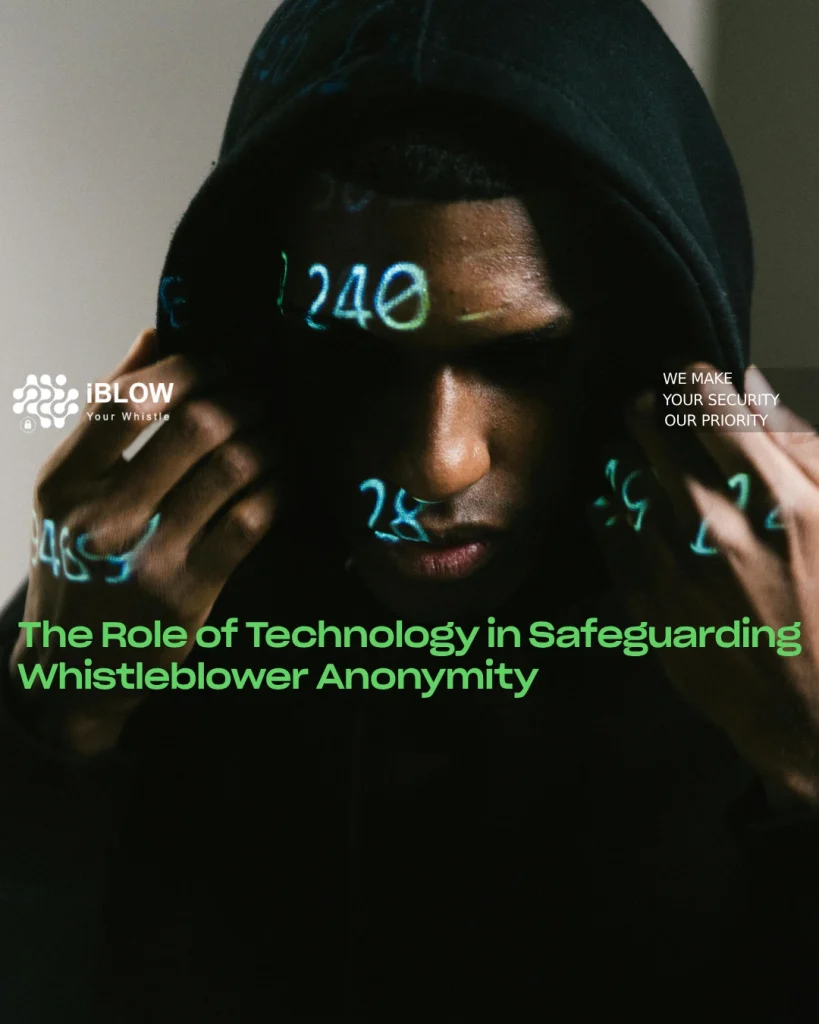
Whistleblowers play a crucial role in exposing corruption, fraud, and unethical practices across industries, that’s why we must use technology for whistleblower anonymity and secure reporting.
The desinformation makes true that their bravery often comes at a significant personal risk.
Retaliation, including job loss, harassment, and legal action, remains a pressing concern.
In response, technology has stepped in to offer solutions that bolster anonymity, making it safer for individuals to report misconduct.
This article explores how advancements in secure communication channels and data encryption methods are enhancing the protection of whistleblowers.
Organisations, governments, and regulatory bodies are increasingly acknowledging the importance of anonymous whistleblowing.
Traditional reporting methods, such as in-person disclosures or standard email communications, are fraught with risks, including identity exposure and message interception.
As a result, secure digital solutions have emerged to protect whistleblowers while ensuring their reports reach the right authorities without compromise.
Modern secure communication platforms offer whistleblowers a safe environment to report misconduct without fear of detection.
These channels rely on sophisticated encryption, decentralisation, and anonymity-preserving mechanisms to protect users.
Key developments include:
End-to-end encryption (E2EE) ensures that messages can only be read by the sender and the intended recipient.
Even the service provider hosting the platform cannot access the content. Notable solutions include:
These platforms significantly reduce the risk of interception by hackers, employers, or state actors who might seek to unmask whistleblowers.
Several organisations have developed secure online whistleblowing portals that allow users to submit reports anonymously.
Features of these platforms include:
These channels are critical in fostering trust, encouraging disclosures, and preventing whistleblowers from resorting to insecure methods of communication.
Encryption plays a fundamental role in securing whistleblower communications and data.
Without robust encryption, sensitive disclosures can be intercepted, modified, or leaked, exposing whistleblowers to significant risks.
Key encryption methods that safeguard whistleblower anonymity include:
As mentioned earlier, E2EE ensures that data is encrypted on the sender’s device and decrypted only on the recipient’s device. This prevents any third party, including internet service providers, employers, or state surveillance agencies, from accessing the message content.
Pretty Good Privacy (PGP) encryption remains a cornerstone of secure email communication for whistleblowers.
PGP uses a public key to encrypt messages and a private key for decryption.
When combined with secure email services like ProtonMail, it provides a robust mechanism to protect sensitive disclosures.
Whistleblowers often rely on The Onion Router (Tor) to anonymise their internet traffic.
Tor routes connections through multiple volunteer-operated nodes, obscuring the user’s IP address and preventing tracking.
Similarly, Virtual Private Networks (VPNs) encrypt internet traffic and mask IP addresses, offering an additional layer of security.
Sharing large volumes of sensitive information requires secure storage and transfer mechanisms. Modern encryption-backed solutions include:
As surveillance techniques become more sophisticated, whistleblower protection must evolve in tandem. Emerging technologies promise to further enhance anonymity and security.
Blockchain’s decentralised nature offers a powerful tool for securing whistleblower reports.
Immutable records ensure that disclosures cannot be altered or deleted, and decentralised identity management reduces reliance on centralised authorities that could be compromised.
AI-powered security tools can help identify potential breaches in whistleblower systems, providing real-time alerts and automated countermeasures against surveillance or hacking attempts.
ZKPs allow verification of information without revealing underlying data.
This technology could enable whistleblowers to prove the authenticity of their claims while maintaining anonymity.
Despite technological advancements, challenges remain in safeguarding whistleblower anonymity:
Technology has significantly advanced the protection of whistleblower anonymity, offering encrypted communication channels, decentralised reporting platforms, and secure data storage solutions.
However, as surveillance and data-tracking methods evolve, continued innovation is essential to stay ahead of emerging threats.
By leveraging encryption, anonymity networks, and emerging privacy-preserving technologies, whistleblowers can make disclosures with greater confidence, ensuring accountability without compromising their safety.
For organisations and policymakers, investing in secure whistleblower protection mechanisms is not just an ethical obligation but a necessity in fostering transparency and integrity.
Be part of the conversation that is shaping the future of work! Book a meeting!
See other articles that may be of interest to you.
We hope you enjoyed this article.
Thank you!
Constantino Ferreira
iBlow.eu
 Liked? Subscribe to receive future articles
To go deeper on whistleblower anonymity, see also:
Official source: Directive (EU) 2019/1937.